About
The Marcus Foundation funds and partners with organizations that are making a difference in the delivery of community food resources or are expanding the understanding and implementation of sustainability.
The Foundation understands community food resources to encompass a web of issues related to hunger, including poverty, community development and economic policy.
Sustainability is both a principle and a practice that obliges us to carefully consider the consequences of today's actions on the future.
Values and Strategy
Our funding and partnering approach focuses on meeting short-term critical needs and addressing underlying system-wide challenges. In both cases The Marcus Foundation seeks partners and grantees, organizations and foundations, that are looking for opportunities to explore new ventures, and bringing creative thinking to their work. Specifically, we work with organizations committed to developing innovative approaches to sustainability and community food resources. Our values include:
Change and Support: We value efforts that further systemic change and those that provide immediate responses to critical needs in our communities
Communication and Collaboration: We believe in the effective and timely exchange of information and the usefulness of collaboration that is both efficient and creative
Listening and Partnership: We value the sharing of ideas, resources and initiatives, and we seek partnerships that leverage the assets and skills of all participants
Our focus on hunger stems from the fundamental reality that hungry people are not able to focus on anything else until this basic human need is satisfied. Unmet, this need undermines our communities and deprives our children of the ability to learn while at school. It forces our older citizens to choose between heat, medicine and food. This was clearly articulated in the 19th century by Ballington Booth, the founder of Volunteers of America in his statement: "You cannot talk to a man about God (or we believe, anything else) when he is hungry..." In 1943 Abraham Maslow captured this truth as part of the "Hierarchy of Needs" asserting that the basic needs of food and shelter must be met before humans can move towards the higher goals of education, family, employment and "self-actualization."
Our emphasis on sustainability is rooted in the awareness that we are all stewards of a world that will soon be passed on to the next generation, as a prior generation passed on to us our world. While the definition of sustainability has evolved over the decades since being introduced in 1987, by the UN World Commission on Environment and Development in the Bruntland Report, at its core it remains a principle of intergenerational equity. Sustainability is the imperative that we consider long-term consequences of our actions and behavior. Distilled to its essence, sustainability requires us to "meet the needs of the present without compromising the ability of future generations to meet their own needs."
Strategically, we believe immediate and critical needs must be addressed, while also working to change the fundamental incentives and dynamics that cause these problems. Whether in business practices, environmental advocacy, or agricultural methods, sustainability is a prism that can generate new perspectives. It can be and must be the driving force that challenges us to live responsibly.
History
The Marcus Foundation was created in 2009 when it became independent from The Grace R. and Alan D. Marcus Foundation that was originally founded in 1990. Both foundations continue to share fundamental values, operating principles and commitments.
Alan Marcus, a corporate and estates attorney, worked closely with Theodore P. Halperin and Daniel Soba (original trustees of the Foundation). Mr. Marcus served in the United States Army during World War II, was an avid fisherman, particularly in the Rangeley Lakes in Maine, and an accomplished painter. He began painting after returning from the War in 1945 because he felt it was a "sort of occupational therapy" (LIFE Magazine, April 5, 1948) and he often produced 20-30 paintings a year. Mr. Marcus was instrumental in organizing art shows though the Association of the Bar of the City of New York.
Early grantees of the Foundation included 92nd Street Y, Museum of the City of New York, the New York Public Library, City Harvest, The Hastings Center, The Humane Society, Natural Resources Defense Council, Riverside Park Fund, and The Riverdale Mental Health Association. In 2009, the Grace R. and Alan D. Marcus Foundation was divided into two separate foundations, one of which is now The Marcus Foundation with office trustees in Denver and Washington DC.
In 2012, The Marcus Foundation began a strategic evaluation of priorities, values, and operations with the goal of leveraging our resources to enhance positive impact. We are committed to addressing issues in sustainability and community food resources with partners whose values and professional working styles are compatible with ours.
Leadership and Governance
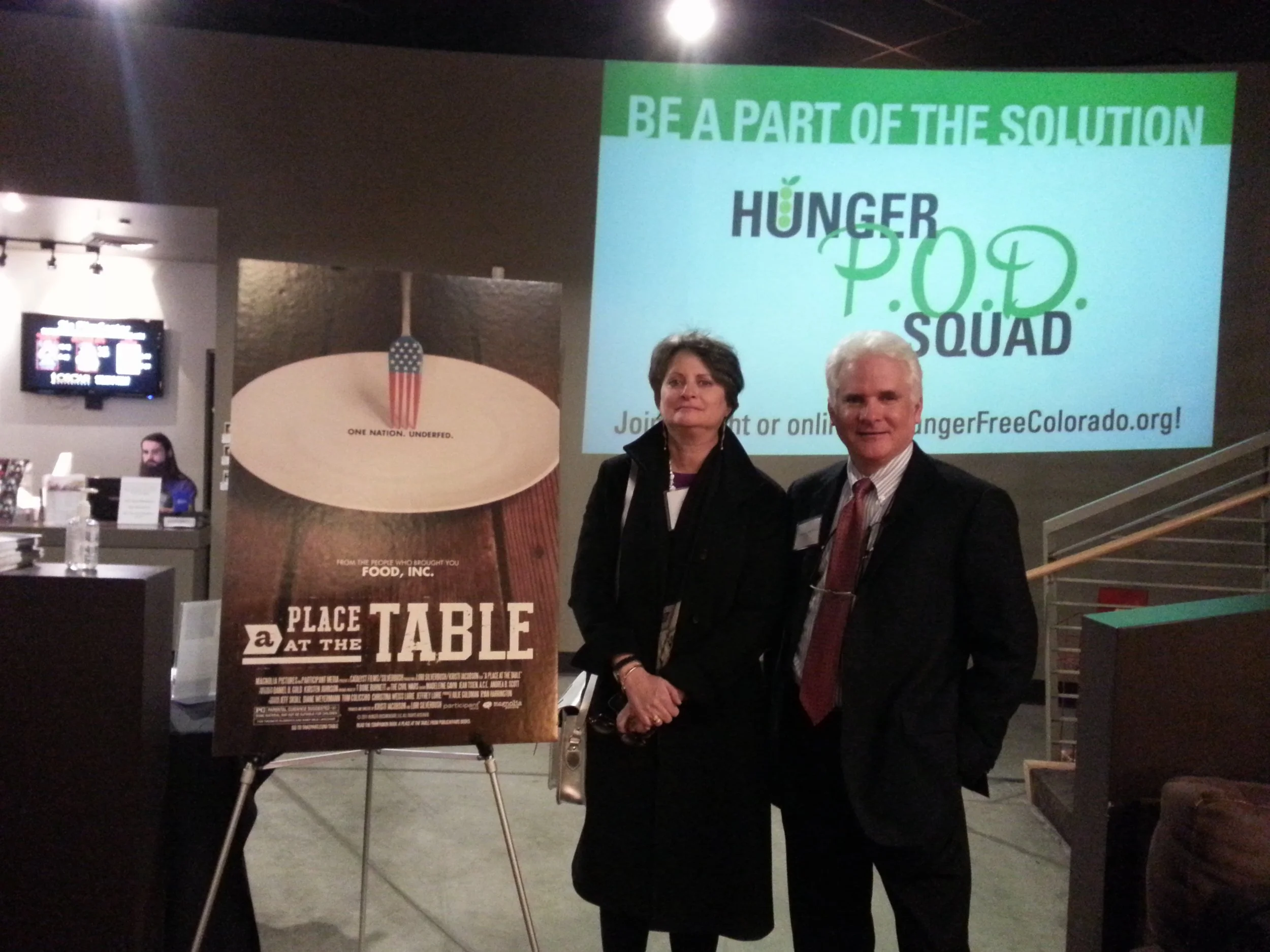
Amy Halperin Wood and Jonathan J. Halperin serve as trustees of The Marcus Foundation. Summaries of their relevant professional experiences are below.
Amy Halperin Wood was most recently the Director of Public Policy at Jewish Family Service (JFS) of Colorado where she managed advocacy and policy liaison, collaboration among social service agencies and assessment of community needs.
Prior to that she was the Director of the Family Safety Net Program at JFS overseeing emergency assistance for homeless prevention, a food pantry, management of state and federal grants, as well as individualized programs to address self-sufficiency issues. Under her stewardship the Family Safety Net department expanded significantly and became a leader in the community in developing best practices in homeless prevention and food pantry management.
In addition to her current leadership role with The Marcus Foundation, Ms. Wood has also worked at Volunteers of America in Denver, at Group W Cable in New York City and at the DeKalb Farmers' Market and Houston's Restaurants in Atlanta.
She grew up in New York City, attended Swarthmore College (BA), The Wharton School at the University of Pennsylvania (MBA) and the Graduate School of Social Work at the University of Denver (MSW).
She believes that ending hunger requires providing immediate food resources, encouraging self-sufficiency and making fundamental and operational changes in the food distribution system.
Ms. Wood lives in Denver and has two sons.
Jonathan J. Halperin is founder and President of Designing Sustainability. He collaborates with business executives, nonprofit and public policy leaders, and creative media producers - designing research, communications and strategies to drive sustainability. He has more than 25 years of experience in nonprofit and commercial organizations such as SustainAbility, Ltd., Resources for the Future, and FYI Resources for a Changing World.
He has provided research-based strategic counsel to executives at Chevron, Hewlett-Packard, Nestle, Exxon-Mobil, DuPont and other major multinational firms as well as to nonprofit organizations such as GreenHome, Mundo Verde The Washington Center for Psychoanalysis, and Everyday Democracy. He served as executive producer of Hope in a Changing Climate, the award-winning documentary on ecosystem restoration that aired on BBC World.
He is a graduate of Duke University and lives with his two children near Washington, DC.